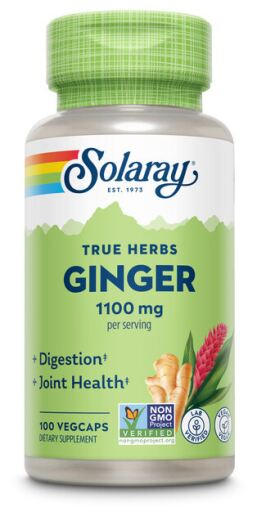
The plant is native to Southeast Asia and is cultivated in the United States, India, China, and tropical regions. The part used is the rhizome. Compounds: volatile oils, aryl alkanes, gingerol, gingerone, shogaols (which give ginger its flavor and aroma), diarylheptanoids, starch. Ginger is traditionally used to treat nausea, dizziness, and dyspepsia. Studies have linked it to a wide range of physiological effects related to the compounds present in the ginger rhizome: anti-inflammatory, antiemetic, antimicrobial, antioxidant, and cardiotonic effects. Antiemetic effect: The antiemetic effect is attributed to the gingerols and shogaols present in the ginger rhizome. Its effect is believed to be due to local gastrointestinal actions: ginger stimulates the secretion of saliva, bile, and gastric secretions, suppresses gastric contractions, increases intestinal muscle tone, and enhances peristalsis. Some compounds in ginger, such as galanolactones, may be responsible for its anti-inflammatory action. This is thought to be due to the inhibition of cyclooxygenase and 5-lipoxygenase, reducing the synthesis of leukotrienes and prostaglandins. Gingerol has demonstrated anti-inflammatory activity. It also regulates lipid levels, significantly improving plasma fat levels and reducing atherosclerosis in studies conducted with albino rabbits. Antimicrobial: studies have demonstrated its effectiveness against B. subtilis and E. coli in vitro. In addition to possible antiviral and antiparasitic activity, ginger has antithrombotic properties: it reduces thromboxane A2 production and inhibits platelet aggregation. Ginger also has a cardiotonic effect: the gingerols and shogaols in ginger have a positive impact on cells isolated from guinea pigs. Immune system: In the presence of ginger, there is an increase in the secretion of interleukin-1, beta, interleukin-6, and macrophages. Antioxidant and anti-migraine effect (due to its anti-inflammatory action): It has potent antioxidant activity.


 0
0